

UNESCO AI Readiness Assessment Methodology (RAM)
National Consultative Sessions for Trinidad and Tobago


The Ministry of Public Administration and Artificial Intelligence (MPAAI), in collaboration with the UNESCO Regional Office for the Caribbean, is hosting a series of national stakeholder consultations as part of the UNESCO Artificial Intelligence Readiness Assessment Methodology (RAM) for Trinidad and Tobago.
These consultations represent a critical stage of the national assessment process and are designed to validate survey findings, gather in-depth sectoral insights, and inform the development of a comprehensive, ethical, and forward-looking national approach to artificial intelligence.
What is the UNESCO AI Readiness Assessment (RAM)?
The UNESCO RAM is an internationally recognised assessment framework used to evaluate a country’s readiness for the safe, ethical, and inclusive deployment of artificial intelligence. It supports governments in implementing UNESCO’s Recommendation on the Ethics of AI by aligning national AI strategies with local values, development priorities, and human rights principles.
Purpose of the Consultations
Each session brings together key stakeholders to:
- Validate findings from the national RAM survey
- Share sector-specific challenges, priorities, and experiences
- Provide practical recommendations for AI governance and policy
- Ensure AI strategies reflect national realities and societal needs
Consultation Schedule
All sessions take place virtually at 10:00 a.m. - 12:00 p.m.
Focus on laws, regulatory frameworks, accountability mechanisms, and rights-based governance approaches for artificial intelligence.
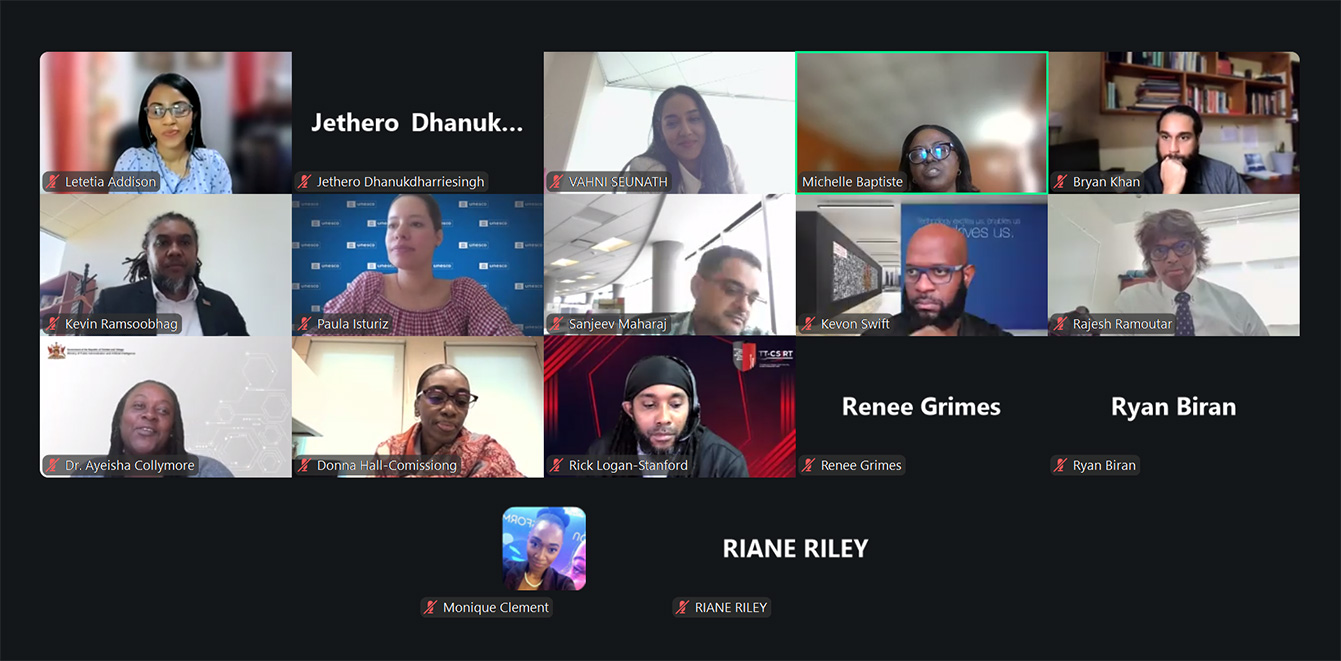
Examination of digital infrastructure, data availability, cybersecurity, and technical capacity required to support AI deployment.

Exploration of social impact, inclusion, public trust, cultural values, and broader societal implications of AI adoption.
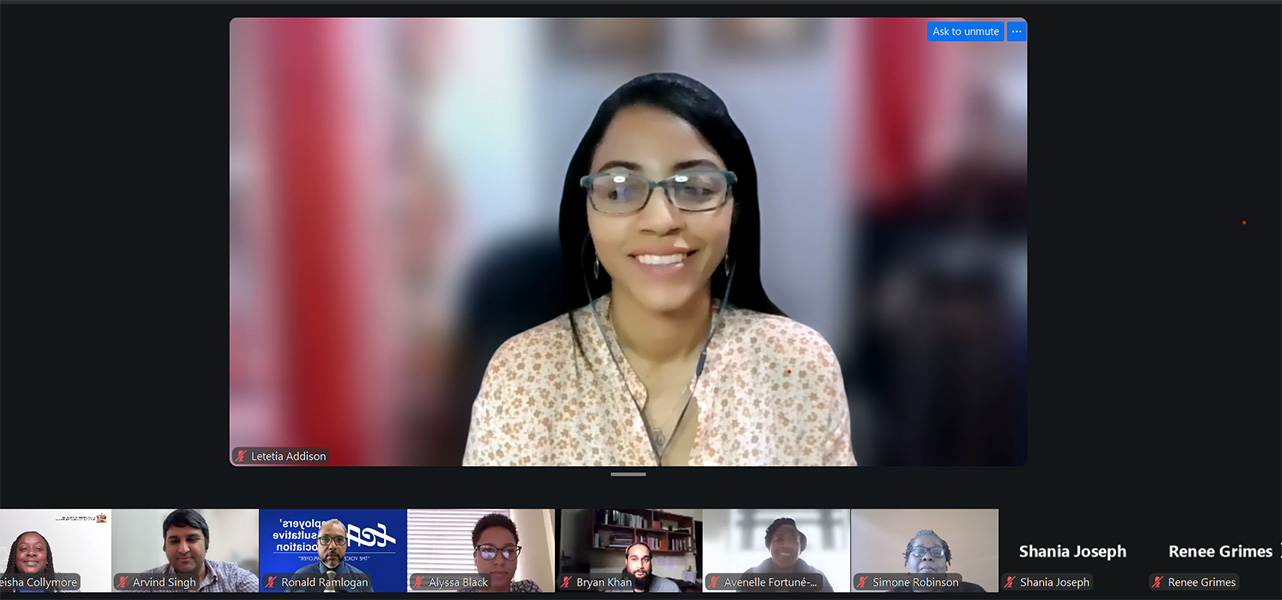
Focus on research capacity, education systems, skills development, and knowledge creation in artificial intelligence.
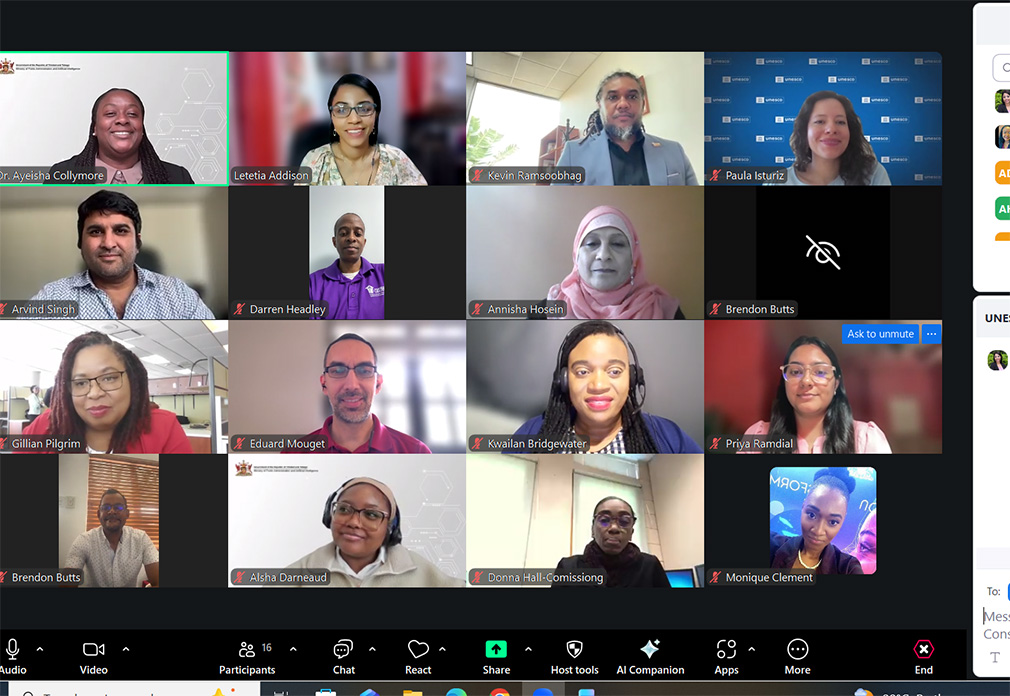
Examination of AI’s role in economic development, innovation, productivity, labour markets, and national competitiveness.
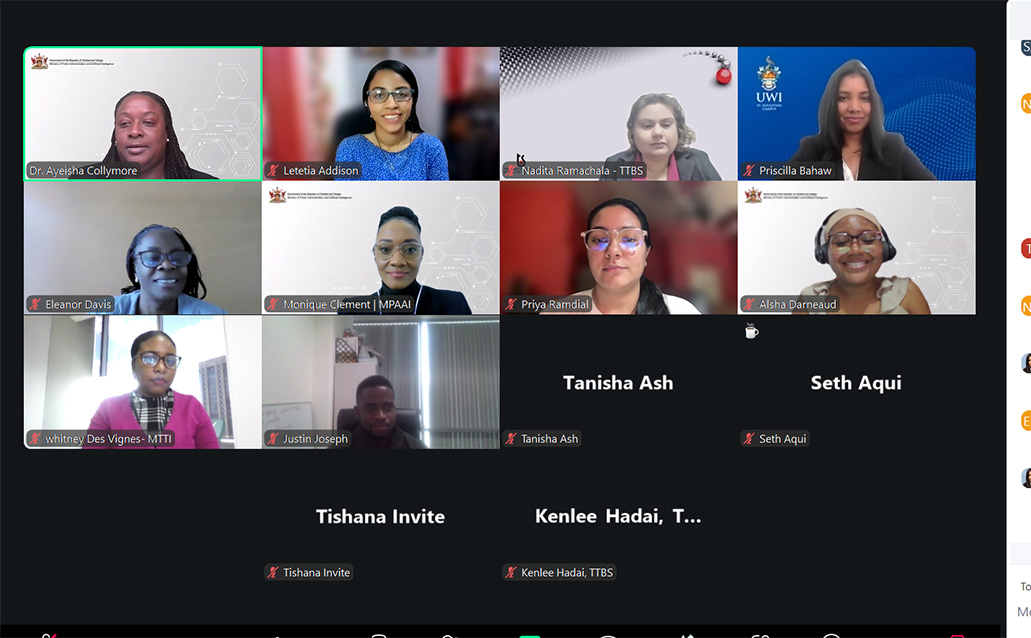
Why This Matters
Artificial intelligence will increasingly shape public service delivery, economic development, and everyday life in Trinidad and Tobago. These consultations ensure that national AI development is guided by ethics, equity, and the public interest - not technology alone.
Broad stakeholder participation is essential to building AI systems that are responsible, transparent, and beneficial to all.